A Polish course at level A2 — for people who already have the basics and want to complete the full declension through all cases, together with every mood and tense. This material is later tested in the B1 certificate examination.
- 100% online. You learn from anywhere in Poland or abroad.
- All seven cases together with their functions in a sentence — not just tables, but real use.
- Explanations in English when needed, especially for structures English does not have.
- No upfront payment. You pay monthly and can stop at any time.
How much does the A2 Polish course cost?
The same programme in both formats — what differs is the number of people and the hourly rate. In a pair you practise dialogue more naturally; one-to-one we work more precisely on your mistakes.
One-to-one
Online lessons, the teacher’s full attention, and times and pace tailored entirely to you.
- Lesson times built around your schedule — mornings, evenings and weekends included
- Reschedule whenever your plans change
- Pace from 1 to 4 lessons per week
- Programme built entirely around your mistakes
- Start at any time
Free, with no obligation
In a pair
Online with a partner, friend or family member — you both pay less than for one-to-one lessons.
- You agree times together with the teacher
- More opportunity to speak and discuss
- Ideal for couples, siblings or a parent with a child
- Start at any time
Free, with no obligation
No upfront payment for the whole course. You pay month by month and can stop at any time — we refund the value of any unused lessons.
All prices are per participant and include materials.
See the full price list →
What you will learn on the A2 course
The programme matches the requirements for level A2 set out in the Polish ministerial regulation.
The cases and their functions in a sentenceClick to expand
- Nominative — as subject and predicate noun
- Genitive — after negation, with genitive-governing verbs and with prepositions
- Dative — as a verb complement (Film podoba mi się.)
- Accusative — with and without prepositions, in time and direction phrases
- Instrumental — as predicate, instrument and after prepositions
- Locative — place, time and topic of conversation
- Vocative — addressing a person (Panie dyrektorze!)
- Declension of nouns of every gender, including difficult forms
- Masculine personal and non-masculine personal forms in the plural
Moods, tenses and aspectClick to expand
- Present tense — all conjugation patterns
- Past tense of perfective and imperfective verbs
- Simple and compound future
- Imperative (czytaj, napiszcie, niech idą)
- Conditional (chciałbym, oglądałby)
- Verb aspect — when to use which form
- Comparison of adjectives: simple, suppletive and periphrastic
- Comparison of adverbs
- Declension of pronouns: personal, demonstrative, possessive and interrogative
Topics and communicative situationsClick to expand
- Everyday and family life
- Free time and interests
- Talking about yourself and family members
- Past events and future plans
- Describing people and places
- Communicative roles: customer, patient, traveller, guest
- The difference between formal and informal register
- Basic socio-cultural conventions in Polish communication
Language skillsClick to expand
- Understanding simple spoken and written everyday texts
- A simple monologue — about yourself and your plans
- Taking part in a conversation and keeping it going
- Short dialogues: suggesting, reporting, justifying an opinion
- Writing a simple text about yourself, a friend, a place or an event
- Spelling at a level that does not disrupt communication
Your teachers
The A2 programme was built on the grammar list from the ministerial regulation — the same list that governs the B1 certificate examination.
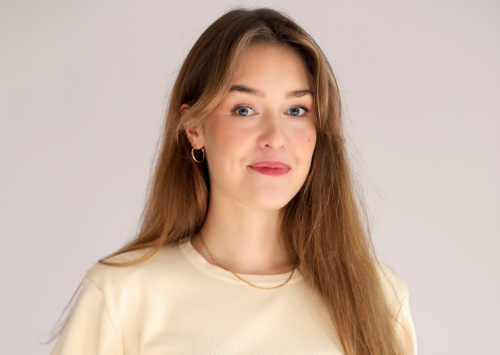
Gabriela Pasek
Director and founder of the school. Qualified teacher of Polish as a foreign language and MA in East Slavic philology. Author of the programme and all teaching materials.
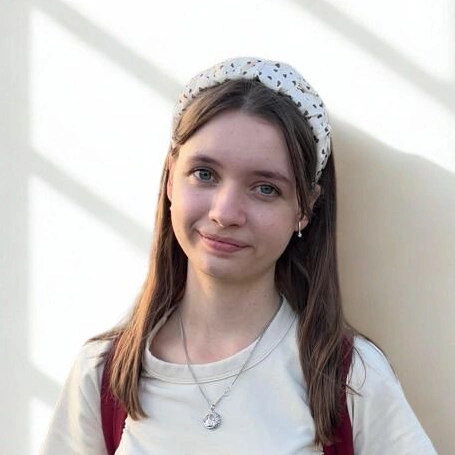
Wiktoria
Prepares students for certificate examinations. Experience interpreting for Polish delegations abroad. Focuses on correct pronunciation.

Julia
Speaks five languages, so she understands the challenges of learning them. Specialist in state examinations and TELC.
What the A2 course includes
90 hours of online lessons — from the A1 foundations to full declension and speaking freely about the past and your plans.
Lessons on interactive Miro boards
Declension only becomes a system once you can see it whole. On the Miro board you build your own declension tables with your teacher and return to them with every new topic.
- Shared notes created live during the lesson
- Access to all materials 24/7, including after the course
- A board prepared for every lesson — not a shared screen with a PDF
- Full audio and video connection with your teacher
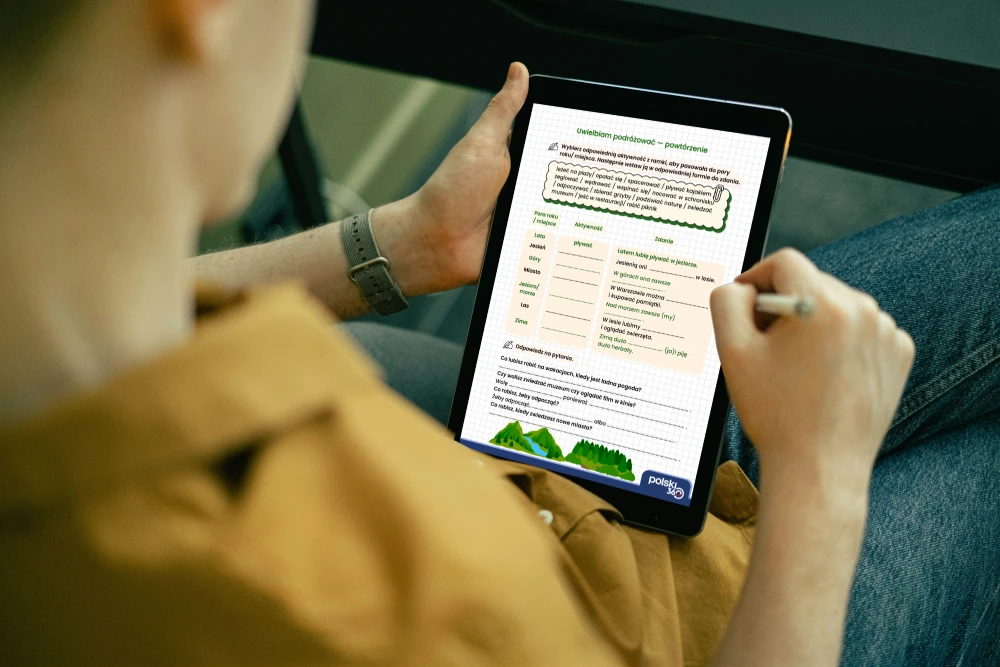
You learn when it suits you
There is no fixed hour you have to fit into. We fit around your week.
A2 is the most common point at which learners give up: the material gets harder while progress feels less visible than at the start. A break usually means going backwards, so we would rather move a lesson than lose a week.
How long does the A2 course take?
If you are aiming for the B1 examination, count backwards from the session you have in mind. Check how long the course takes at your pace.
How many lessons per week?
The course covers 90 teaching hours. The total price is fixed regardless of pace.
What our learners say
“Thank you so much for preparing me for the B1 exam! I recommend the school and I will definitely come back.”
“Five stars. The materials are genuinely useful and Gabriela explains everything clearly. I study together with my son from different places — it works beautifully.”

“A great school, my daughter is making fast progress and really enjoys the lessons. Highly recommended!”
Polish course A2 — the level where mistakes get locked in
A2 is the point where the language stops being a set of memorised phrases and becomes a system. Full declension through all seven cases arrives, along with the conditional and imperative moods and verb aspect — three things no shortcut avoids. It is also the level where the most durable mistakes form: you are understood, so you stop paying attention to endings. In the B1 examination those endings are exactly what gets marked.
Why verb aspect causes the most trouble
Because English does not have it in this form. The difference between „czytałem książkę” and „przeczytałem książkę” is not about time but about whether the action was completed. English expresses this through context and phrases like „I was reading” versus „I read it through”; Polish uses two different verbs, and those pairs have to be learned.
The vocative — the case many courses skip
Courses for foreigners often stop at six cases and treat the vocative as a curiosity. Yet it is used constantly in Polish: „panie doktorze”, „proszę pani”, „Aniu”. The A2 requirements in the regulation name it explicitly, so we cover it alongside the others.
What you can do after the A2 course
Following the requirements in the regulation, you understand the main content of spoken and written texts about everyday life, family and free time. You deliver a simple monologue, take part in a conversation and can keep it going. You write simple texts about yourself, a friend, a place or a past event. Gaps in pronunciation and grammar no longer disrupt communication — and that is the right starting point for B1 exam preparation.
How to start the A2 course
Free trial lesson
We check whether A2 is the right starting level and discuss your goal.
Choose format and times
You decide: one-to-one or in a pair. We agree times that fit your schedule.
90 hours of lessons
You work through the full A2 programme with the same teacher.
Ready for B1
You finish with the material that is tested in the certificate examination.
Common questions about the A2 course
Are lessons held in person?
No. Polski360 is an online-only school — we do not run in-person classes in any city. All lessons take place over the internet, on interactive Miro boards with audio and video. That means you can learn from anywhere in Poland or abroad.
Is there a certificate examination at A2?
State certificate examinations for adults start at B1. The requirements for A2 are set out in the ministerial regulation, and that material — including all the cases, moods and verb aspect — is also tested in the B1 exam.
I can speak but I get the endings wrong — is A2 right for me?
Most likely yes. That is the typical situation of people who picked Polish up by ear at work or in the family: communication works, but declension is random. The A2 course puts exactly that in order.
How many cases do we cover at A2?
All seven, including the vocative, which courses for foreigners often skip. We do not stop at declension tables — for each case we practise its functions in a sentence.
How much does the A2 Polish course cost?
One-to-one it is 880 zł per month, which is 9900 zł for the full 90-hour course. In a pair it is 720 zł per month per person, so 8100 zł per person.
Do I need to have completed level A1?
No certificate is required, but you do need the basics: the alphabet, pronunciation, the present tense and everyday vocabulary. During the free trial lesson we check whether A2 is the right starting point.
Does the teacher speak English?
Yes. In the early lessons your teacher can explain difficult points in English, so you are never left guessing. As the course progresses that becomes less necessary and lessons shift increasingly into Polish.
Do I have to pay for the whole course upfront?
No. You pay month by month and can stop at any time — we refund the value of any unused lessons. Unlike schools that require payment for an entire semester in advance, you take no financial risk with us.
Are materials included in the price?
Yes. You buy no textbooks separately, and access to the materials on the Miro boards stays with you after the course ends.
Ready for level A2?
Book a free trial lesson — we will check your level, help you choose a format and map out a 90-hour plan at your pace.
Book a free trial lesson